

Table of Contents
In Florida and other hurricane-prone regions, doors are often the weakest point of a building. A large sliding door or front entrance that fails in a storm lets wind and rain in, and the sudden pressure change inside can damage the roof and walls.
Hurricane proof doors are built to stop that from happening. They combine reinforced frames, laminated impact-resistant glass and multi-point locking, and they are tested to resist flying debris and hurricane-force wind pressure.
This guide covers the main types of hurricane doors (sliding glass doors, patio doors and front doors), how they are tested and approved, which materials to choose, and the certified systems SIMPAS supplies for Florida projects.
What Are Hurricane Proof Doors?
Hurricane proof doors, also called impact doors or hurricane impact doors, are exterior doors designed and tested to stay intact during a hurricane. No door is literally storm-proof, but an impact-rated door is engineered to resist the debris and wind loads that destroy standard doors.
Three things make the difference:
- Laminated impact glass. Two or more layers of glass are bonded to a strong interlayer. If the glass is hit, it may crack, but the interlayer holds it in the frame instead of letting it shatter.
- Reinforced frames. Aluminum or steel profiles are strong enough to carry high wind loads without bending or pulling out of the opening.
- Hardware and anchoring. Multi-point locks hold the sash tight to the frame, and the frame is anchored into the structure to resist both positive and negative wind pressure.
The result is a door that keeps the building envelope closed during a storm, and offers better security, insulation and sound reduction the rest of the year.
Protect Your Property with Certified Hurricane Systems
Explore premium impact windows, hurricane proof doors, and certified sliding systems engineered for demanding coastal environments and contemporary architecture.
How Hurricane Doors Are Tested and Approved
In Florida’s wind-borne debris regions, the Florida Building Code requires exterior doors to be impact-rated or protected by shutters. A product proves this by passing laboratory tests:
- Missile impact tests (ASTM E1886 / E1996, or TAS 201 in Miami-Dade). A piece of lumber is fired at the glass and frame. Large-missile tests apply to doors near the ground; small-missile tests simulate gravel and roof debris higher up.
- Cyclic wind pressure (TAS 203). After impact, the door goes through thousands of pressure cycles that simulate the gusts of a hurricane.
- Design pressure (DP) rating. This shows how much wind pressure the door resists, and it must meet the requirement for your building’s location and height.
- Water and air infiltration (TAS 202). This checks the door keeps out wind-driven rain.
Products that pass receive a Florida Product Approval number. The strictest standard is a Miami-Dade Notice of Acceptance (NOA), required in the High-Velocity Hurricane Zone (HVHZ) of Miami-Dade and Broward counties. Ask for both numbers when you compare hurricane doors.
All SIMPAS aluminum door systems from Reynaers Aluminium and Schüco hold a Florida Product Approval and pass the TAS 201, TAS 202 and TAS 203 tests, the Miami-Dade test protocols for impact, air and water infiltration, and cyclic wind pressure. Florida Product Approval numbers are available on request for permits and inspections.
Hurricane Sliding Glass Doors
Large sliding openings are a defining feature of contemporary homes. Hurricane sliding glass doors make them possible on the coast without giving up protection.
The challenge is size. The bigger the glass panel, the more wind load it has to carry. That is why hurricane sliding doors use heavy-duty sashes, reinforced interlocks and impact glass sized for the design pressure of the project.
SIMPAS supplies two sliding systems with Florida Product Approval, both tested to TAS 201, 202 and 203:
- Reynaers CP 155 LS (ConceptPatio 155 Lift & Slide). The handle lifts the sash off its seals so very large panels slide easily, then lowers it to seal tight when closed. It suits wide openings in luxury homes and waterfront residences.
- Schüco ASS 39 PD.NI (Panorama Design, non-insulated). Its minimal frame gives an almost all-glass look for panoramic views.
See our guide to lift-and-slide doors for how the two operating types compare.
Hurricane Patio Doors
Patio and terrace doors connect living spaces to decks, pools and gardens, so they are opened every day and need to stay easy to use as well as strong.
Hurricane patio doors combine impact glass with hinged or tilt-and-turn sashes and multi-point locking. SIMPAS supplies two terrace door systems with Florida Product Approval, both tested to TAS 201, 202 and 203:
- Schüco AWS 70.HI Terrace Door
- Schüco AWS 75.SI+ Terrace Door
Both use thermally insulated aluminum profiles, so they also help keep air-conditioned rooms cool in Florida’s heat.
Looking for Hurricane Sliding Glass Doors?
Discover elegant sliding and lift-and-slide systems designed to combine panoramic views, smooth operation, energy efficiency, and hurricane protection.
Hurricane Front Doors
The front door shapes the first impression of a home, and it is also a major entry point for wind during a storm.
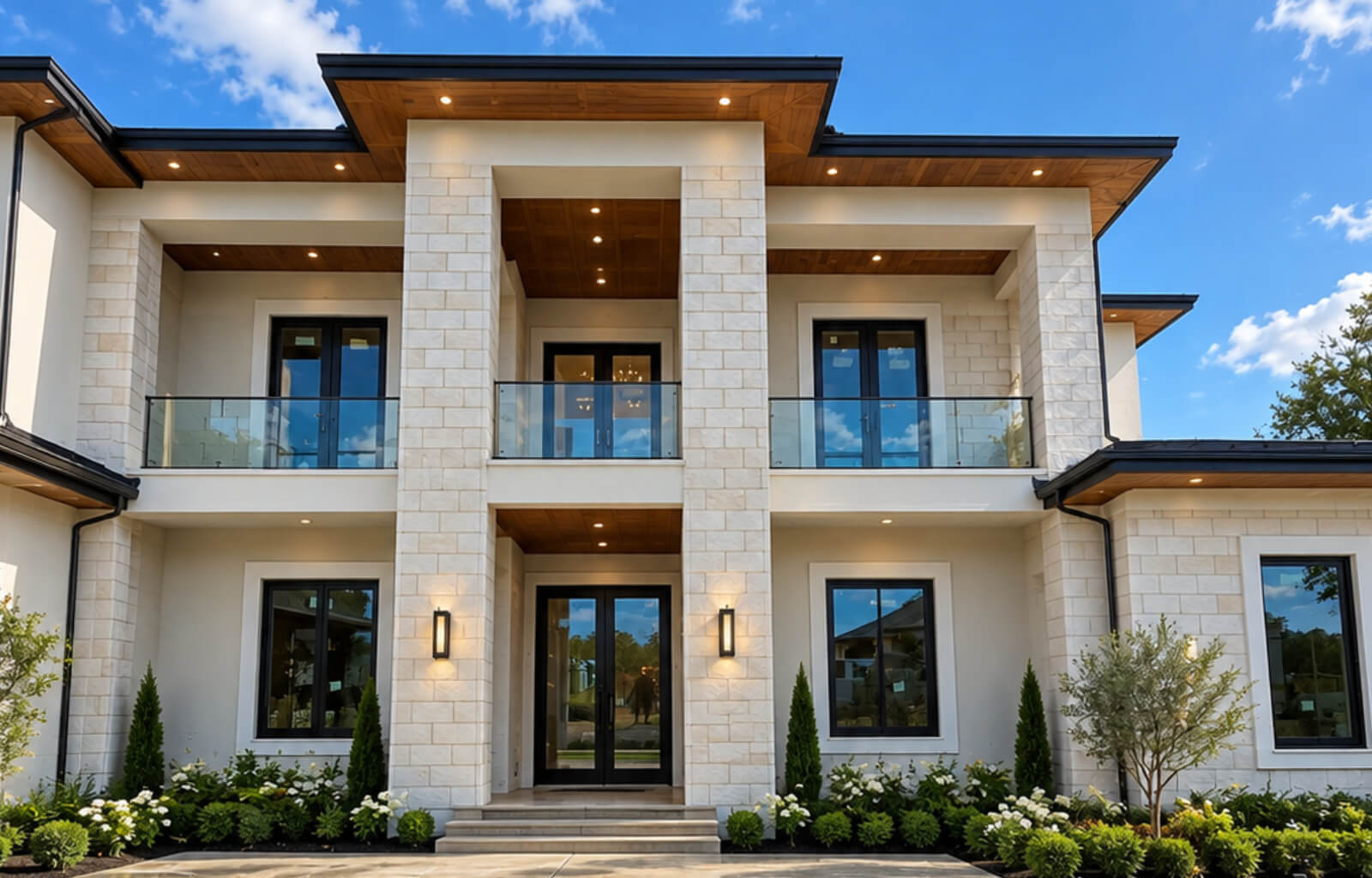
Hurricane front doors are available as hinged single or double doors, as pivot doors, and with glass sidelights. Glazed entrances use the same laminated impact glass as windows. Solid panels are reinforced to resist impact.
For statement entrances, an oversized pivot door can be built in aluminum or in steel. Steel gives the slimmest frame around large glass panels, which suits modern and industrial-style architecture. See our custom steel entry doors guide for design ideas.
Before choosing a front door for a coastal project, confirm the exact door size and configuration is covered by its product approval. Approvals list the sizes and glass types that were tested.
Aluminum vs Steel Hurricane Doors
Most hurricane doors are made in aluminum or steel. Both can be impact-rated; the choice comes down to design and budget.
Aluminum is the most widely used material for impact doors. It is strong, light and naturally resistant to corrosion, which matters in salty, humid coastal air. It supports slim profiles and very large glass panels, and thermally broken profiles keep heat out. At SIMPAS, aluminum doors are built on systems from Reynaers Aluminium and Schüco. These are the SIMPAS door systems with Florida Product Approval.
Steel gives the slimmest sightlines and the most distinctive look, from minimal black frames to Corten and brass finishes. It suits prestigious residences, boutique hotels and architecturally demanding projects. SIMPAS manufactures custom steel doors with profiles from Secco Sistemi, available with thermally broken frames.
Matching Impact Windows and Curtain Walls
A hurricane-ready building needs every opening protected, so doors should be planned together with the windows and facade.
SIMPAS also supplies window and curtain wall systems with Florida Product Approval:
- Windows: Reynaers MasterLine 8, MasterLine 10, SlimLine 38 and ConceptSystem 77; Schüco AWS 65, AWS 70.HI and AWS 75.SI+
- Curtain walls: Reynaers MasterLight, SlimWall 35 and ConceptWall 50; Schüco FWS 60
For a full guide to impact windows, read Hurricane Impact Windows: A Complete Guide.
For coastal glazing, see our impact glass for Florida.
Do Hurricane Doors Lower Energy Bills and Insurance Costs?
They can help with both.
Energy. The laminated glass in impact doors is usually combined with insulated glass units and low-E coatings, and the frames are thermally broken and tightly sealed. Together this cuts heat gain from Florida sun and reduces air leakage, so air conditioning works less.
Insurance. In Florida, homeowners with approved impact-rated openings may qualify for wind mitigation credits on their insurance. The savings depend on your insurer and a wind mitigation inspection, so check with your insurance provider.
Impact glass also reduces outside noise and makes forced entry much harder, which are welcome side benefits year-round.
Why Professional Installation Matters
Even a certified hurricane door can fail if it is installed incorrectly. The product approval only applies when the door is installed exactly as tested.
That means using the specified anchors, spacing and fasteners for the wall type, and sealing the frame to keep wind-driven rain out. Small errors can lead to water leaks, air leakage or reduced wind resistance.
In Florida, installation must follow the product approval and local building codes, and it is inspected. Work with installers experienced in impact-rated systems, and keep the approval documents for the inspector.
Why Choose SIMPAS for Hurricane Doors
As one of the top certified Reynaers manufacturers for the U.S. market, SIMPAS builds impact doors and windows with systems from Reynaers Aluminium, Schüco and Secco Sistemi. Every door is made to order in our own factories in Greece and shipped to projects across Florida and the U.S.
From luxury residences and waterfront homes to commercial facades, we combine certified hurricane performance with architectural design. Our team supports architects and contractors from shop drawings to delivery. Our aluminum products are NFRC certified, and all products come with a 10-year warranty.
Hurricane Proof Doors: Frequently Asked Questions
Are hurricane proof doors worth it? In hurricane-prone areas, usually yes. In Florida’s wind-borne debris regions, impact-rated doors or shutters are required by code. Impact doors protect without putting shutters up before every storm, and add year-round security, insulation and noise reduction. They may also qualify for insurance wind mitigation credits.
Can sliding glass doors be hurricane-rated? Yes. Hurricane sliding glass doors use laminated impact glass, reinforced sashes and interlocks, and are tested like any other impact door. Lift-and-slide systems such as the Reynaers CP 155 LS are often chosen for very large openings.
What is the difference between impact doors and hurricane shutters? Shutters are added in front of a standard door before a storm and must be closed in time. Impact doors are protected all the time, with no setup, and let light in while you shelter.
Do I need a Miami-Dade NOA? If your project is in Miami-Dade or Broward County (the High-Velocity Hurricane Zone), products need a Miami-Dade Notice of Acceptance. Elsewhere in Florida, a Florida Product Approval is required. Check the requirements with your local building department.
Build with Confidence in Hurricane-Prone Regions
From luxury residences to commercial facades, SIMPAS delivers certified impact windows and hurricane proof doors tailored to high-performance architectural projects.
Final Thoughts on Hurricane Proof Doors
In a hurricane, a building is only as strong as its weakest opening, and that is often a door. Certified hurricane sliding doors, patio doors and front doors keep the building envelope closed, while letting you design with large glass and clean lines.
Choose systems with the right Florida Product Approval or Miami-Dade NOA for your location, select aluminum or steel to suit your design, and have them installed exactly as tested.
SIMPAS combines Florida-approved aluminum systems from Reynaers and Schüco, and custom steel doors from Secco Sistemi. Contact us to discuss the doors for your project.
